
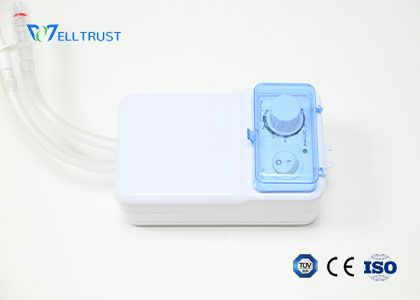
A disposable arthroscopic suction irrigator combines irrigation and aspiration in one fluid-management device. During minimally invasive procedures, controlled fluid flow helps maintain the working space and supports a clearer view of the operative area. Choosing the right device requires attention to control method, flow adjustment, suction performance, internal-channel design, connectors, tubing and compatibility with the operating-room fluid system.
A suction irrigator is used to deliver fluid and remove blood, tissue debris and other material from the surgical field. The disposable arthroscopic design integrates irrigation and suction functions, allowing the operator to switch between the two modes without changing the main hand control. This can help simplify setup and keep fluid-management actions within the same workflow.
The device is designed for arthroscopy and is also described for intervertebral foraminoscopy, percutaneous nephroscopy and ureteroscopy. The appropriate indication, connection method and operating technique must follow the applicable product instructions and the requirements of the procedure.
| Function | Role in the workflow |
|---|---|
| Irrigation | Delivers fluid to support the working space and visualization. |
| Suction | Removes fluid, blood and tissue debris from the operative field. |
| Dual-button control | Allows switching between high-pressure irrigation and suction. |
| Stepless flow adjustment | Supports gradual adjustment for different procedural requirements. |
| Integrated tubing set | Provides a pre-assembled configuration for faster preparation. |
The responsive dual-button system allows the operator to change between irrigation and suction functions directly. A control layout should be easy to identify while wearing gloves and should provide consistent feedback during the procedure. The available flow-control design includes high-pressure irrigation and high-efficiency suction modes.
Tissue debris can interrupt suction and reduce the consistency of fluid removal. An optimized internal channel geometry is intended to reduce blockage and help maintain continuous performance during complex procedures. This feature is particularly relevant when the field contains blood clots or larger debris.
High-flow irrigation and suction support rapid clearing of fluid and debris when the visual field needs to be restored. Flow performance should be considered together with the pump, tubing, cannula, connector and the amount of fluid required by the planned technique.
A waterproof and airtight design supports the handling requirements of a fluid-management device. The construction should be inspected before use, and all connections should be secured according to the applicable instructions.
The available product information describes low-noise operation below 55 dB. Noise performance can be relevant in an operating environment where staff communication, equipment alarms and other devices are active at the same time.
A suction irrigator works as part of a wider fluid-management configuration. The product uses a medical-grade Luer taper and a universal connector design. Before ordering, confirm that the connector and tubing set match the intended pump, vacuum canister, fluid source and other accessories.
The device is described as compatible with standard arthroscopic machine pumps and fluid-management systems. Compatibility should still be confirmed for the specific equipment combination, especially when a hospital uses different pump brands or custom tubing arrangements.
An integrated, sterile-packed tubing set can reduce preparation steps and help limit handling during setup. Disposable packaging may also support a single-use workflow, but the user should follow the product labeling and applicable infection-control procedures rather than relying on general assumptions about reprocessing.
Begin with the procedure and the required fluid-management pattern. Knee and shoulder arthroscopy may require repeated transitions between irrigation and suction, while other endoscopic procedures may place different demands on access, tubing and flow.
Choose a control layout that allows rapid switching and gradual flow adjustment. The dual-button design should be evaluated with the intended hand position, gloves and operating-room workflow.
Review the Luer taper, universal connector, tubing set and pump interface together. A device should not be ordered based only on the connector appearance; the complete fluid path must be confirmed with the equipment supplier or technical team.
Confirm whether the configuration is supplied as a sterile-packed disposable system and follow the instructions for storage, opening, connection and disposal. Hospitals should align the product with their internal infection-control procedures.
A suction irrigator is normally evaluated as part of a complete arthroscopy configuration. Related WTT products include the Arthroscopic Plastic Cannulas, Shaver Arthroscopy, 4K UHD Endoscope Camera System and AGM W100 Wireless Endoscope Camera System. The final combination should be confirmed according to the procedure, equipment interface and local requirements.
It is a fluid-management device that combines irrigation and suction functions to support visualization during selected minimally invasive procedures.
A dual-button control system switches between high-pressure irrigation and suction. The design also includes stepless flow adjustment and a valve mechanism for tactile control.
An optimized internal channel geometry is designed to reduce tissue-debris blockage and support continuous fluid-management performance.
Confirm the universal connector, Luer taper, tubing configuration and compatibility with the planned pump or fluid-management system.
Applications described for the device include arthroscopy, intervertebral foraminoscopy, percutaneous nephroscopy and ureteroscopy. Final use must follow applicable instructions and clinical requirements.
This article provides product and procurement information. Device selection and clinical use must be determined by qualified healthcare professionals in accordance with applicable instructions and regulations.
