
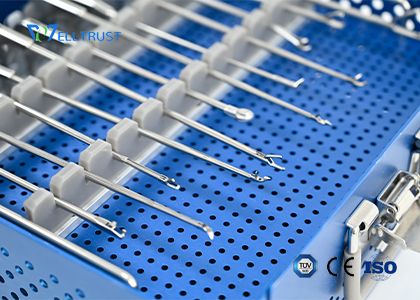
Arthroscopic surgery requires specialized instruments that can be introduced through small access portals and manipulated within the joint. Among these instruments, the Arthroscopic Punch is commonly used for controlled tissue cutting and removal during arthroscopic procedures. Different jaw configurations, shaft designs and tip orientations allow arthroscopic punches to be adapted to different surgical approaches.
In addition to punches, an arthroscopy instrument configuration may include graspers, suture graspers, hook scissors and probing hooks. Combining these instruments provides different functions for tissue manipulation, cutting, grasping and assessment during minimally invasive joint procedures.
An Arthroscopic Punch is a hand-operated surgical instrument designed for use through an arthroscopic access portal. It generally consists of a slender shaft, a working tip and a handle mechanism. When the handle is operated, the working jaws open and close to cut or remove a selected portion of tissue.
The narrow shaft allows the working end to reach areas inside the joint while the handle remains outside the surgical site. Depending on the design, the working tip can be straight, curved or angled to provide access to different anatomical locations.
The working principle of an Arthroscopic Punch is based on mechanical cutting through the movement of its working jaws. The surgeon positions the tip around the intended tissue and activates the handle to close the cutting mechanism. The instrument can then be repositioned as required during the procedure.
Different tip configurations provide different approaches to the target area. A straight punch can provide a direct working direction, while curved or angled designs can be useful when the target area is not aligned directly with the access portal.
Because arthroscopic procedures involve limited working space, the relationship between shaft length, tip geometry and handle movement is important when selecting an instrument.
Arthroscopic punches are available in several configurations to accommodate different surgical requirements.
Straight Punch: A straight punch has a straight working shaft and tip configuration. It provides a direct working orientation and can be selected according to the access direction and target location.
Curved Punch: A curved punch incorporates a curved working tip. Right- and left-curved versions can provide different approaches to tissue located on either side of the working direction.
Up-Tip Punch: An up-tip configuration changes the orientation of the working end relative to the shaft. This can provide an alternative approach when the target tissue requires an upward-facing cutting direction.
Rotary Punch: A rotary punch incorporates a rotating working tip. Different configurations, such as 90° left-curved and 90° right-curved tips, provide additional flexibility for accessing specific areas of the joint.
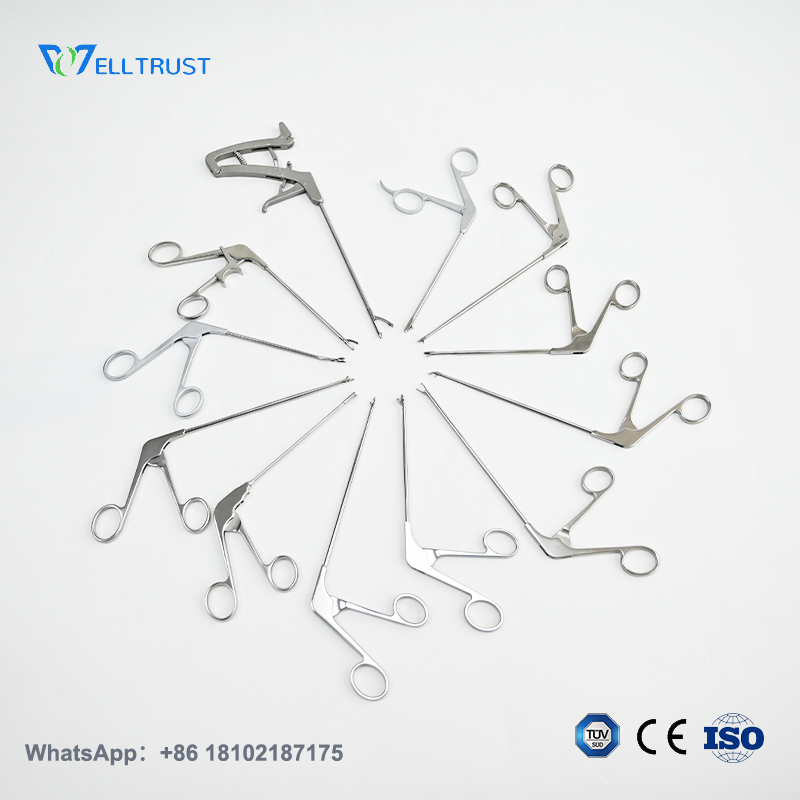
An Arthroscopic Punch is generally used together with other arthroscopy instruments rather than as an isolated device. Different instruments provide complementary functions during a procedure.
Grasper: A grasper is designed to hold and manipulate tissue or other surgical materials within the joint.
Suture Grasper: A suture grasper is designed for grasping and manipulating sutures during arthroscopic procedures.
Hook Scissor: A hook scissor combines a hook-shaped working configuration with a cutting function and can be used according to the selected surgical technique.
Probing Hook: A probing hook can be used to examine or manipulate tissue during arthroscopic assessment.
The combination of cutting, grasping and probing instruments allows the surgical team to use different tools according to the requirements of the procedure.
When evaluating an Arthroscopic Punch, several specifications can be considered. These include working tip configuration, shaft length, shaft diameter, handle design and the orientation of the cutting jaws.
In the Well Trust product range shown here, many of the punch instruments have a working length of approximately 120 mm or 125 mm. Available configurations include straight, curved left, curved right, up-tip and rotary punch designs. The listed working diameters include approximately 2.2 mm, 3.0 mm, 3.2 mm, 3.4 mm, 4.4 mm and 4.5 mm depending on the specific model.
These different dimensions allow distributors and professional users to select instruments according to the required working configuration.
Well Trust supplies orthopedic and arthroscopic surgical instruments for professional medical applications. Its arthroscopy instrument range includes different types of Arthroscopic Punch designed with various tip configurations and working dimensions.
The product range includes straight-shaft punches, curved-left and curved-right punches, up-tip punches, rotary punches and reverse-tip configurations. Additional instruments include graspers, organizational grasping forceps, suture graspers, hook scissors and probing hooks.
For example, the listed products include 4.4 × 120 mm straight and curved punch configurations, 4.5 × 120 mm and 4.5 × 125 mm punch options, as well as smaller 3.0 mm, 3.2 mm, 3.4 mm and 2.2 mm configurations. The specific product model and specification should be checked according to the required instrument configuration.
The selection of an Arthroscopic Punch should be based on the intended surgical application, access direction and target anatomy. Tip orientation is particularly important because a straight, curved or rotary design can provide a different working approach.
Working diameter and shaft length should also correspond to the access system and the required working space. For purchasing departments and distributors, reviewing the complete product code and specification can help distinguish between similar punch configurations.
An Arthroscopic Punch is a surgical instrument used for controlled cutting or removal of tissue during arthroscopic procedures. The specific application depends on the surgical technique and target tissue.
A straight punch provides a direct working orientation, while a curved punch changes the direction of the working tip. Curved-left and curved-right configurations can provide different approaches to the target area.
A rotary punch has a working tip that can rotate relative to the shaft. Different rotary configurations, including 90° left- and right-curved designs, can provide alternative working orientations.
Other arthroscopy instruments can include graspers, suture graspers, hook scissors and probing hooks. These instruments provide different functions such as tissue manipulation, suture handling, cutting and probing.
Important specifications include working tip design, shaft length, working diameter, tip orientation and handle configuration. The appropriate combination depends on the intended procedure and access requirements.
Yes. The Well Trust product range shown includes straight, curved, up-tip, rotary and reverse-tip punch configurations, together with other arthroscopic instruments such as graspers and suture graspers.
The Arthroscopic Punch is an important instrument for controlled tissue cutting and removal during arthroscopic procedures. Straight, curved, up-tip and rotary configurations provide different working orientations, while complementary instruments such as graspers, suture graspers and probing hooks support other stages of arthroscopic surgery.
The Well Trust arthroscopy instrument range provides multiple punch configurations and working dimensions, allowing professional users and distributors to select products according to their specific requirements. Reviewing the tip design, working diameter, shaft length and product model can help identify the appropriate instrument configuration for a particular arthroscopic application.
