
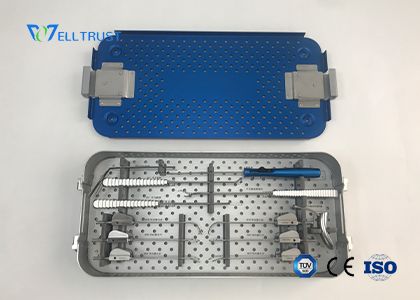
The menisci are two crescent-shaped pieces of fibrocartilage located between the femur and tibia in the knee. They contribute to load distribution, joint stability and the normal movement of the knee. When a meniscus is damaged, treatment may involve conservative management or surgery depending on factors such as the tear pattern, location, symptoms and overall condition of the knee.
When surgical treatment is indicated, Meniscus Repair may be considered when the tear has characteristics that allow the tissue to be repaired. Compared with removing damaged tissue, meniscus repair focuses on bringing the torn portions together and maintaining as much functional meniscal tissue as clinically appropriate.
Meniscus Repair is a surgical procedure used to stabilize and approximate selected meniscal tears. The objective is to bring the separated portions of the meniscus into an appropriate position so that the tissue can heal after the procedure.
Meniscus repair can be performed using different surgical approaches and suture techniques. Arthroscopic procedures are commonly used because they allow the surgeon to visualize the knee joint through small portals while using specialized instruments through additional access points.
The appropriate repair method depends on factors such as tear location, tear pattern, tissue quality and the patient's individual circumstances. Not every meniscal tear is suitable for repair, so the treatment approach is determined by the orthopedic surgeon.
The meniscus plays an important role in the biomechanics of the knee. Removing a portion of the meniscus can reduce the amount of functional tissue available within the joint. When a tear is considered repairable, preserving the existing meniscal tissue may therefore be an important part of the treatment plan.
Repair techniques aim to stabilize the damaged area rather than simply removing the torn section. Depending on the tear configuration, different suture patterns and instrument configurations may be selected.
The surgical decision is based on the characteristics of the individual tear and the clinical assessment rather than on a single repair technique being suitable for every patient.
During arthroscopic Meniscus Repair, the surgeon first establishes access to the knee joint and examines the meniscus using an arthroscope. The tear is assessed to determine its location, configuration and suitability for repair.
Specialized instruments can then be introduced through the arthroscopic portals. Depending on the procedure, the surgeon may prepare the meniscal tissue, position a needle or suture, pass the suture through the selected area and secure the torn tissue.
After the repair has been completed, the fixation is assessed arthroscopically. The exact sequence and technique vary according to the tear and the selected repair method.
A dedicated Meniscus Repair instrument set can contain different instruments for tissue preparation, access, needle positioning and suture management.
Needle Guide: Needle guides help establish and control the intended needle trajectory. The set shown in the product information includes multiple dual-needle protector configurations for different positions, including right/front, left/front, right/middle, left/middle, right/back and left/back.
Meniscus File: The meniscus file can be used for controlled preparation of the meniscal tissue when required by the surgical technique. The illustrated set includes 220 mm files with 2.5 × 40° and 2.5 × 90° configurations.
Dissector: The listed dissector has a length of 150 mm and a specification of Φ1.5 × 3.4 mm. It can be used for tissue manipulation and preparation according to the intended surgical technique.
Meniscus Dual Needle Protector: The dual needle protector shown in the set has a listed length of 60 mm and a 20 mm specification. It is designed as part of the needle-protection and positioning configuration.
Meniscus Guide: The set includes a 120 mm Meniscus Guide, Type I, for positioning and guidance during meniscal procedures.
Knot Pusher & Cutter: The listed knot pusher and cutter has a length of 145 mm and a specification of ≤0.45 mm. It can be used for managing and cutting suture knots according to the selected repair technique.
There are several approaches to Meniscus Repair, including different suture configurations and portal arrangements. The instruments required can therefore vary according to the planned technique.
Needle guides and protectors can help establish an appropriate path for needle passage, while meniscus guides can assist with instrument positioning. Files and dissectors may be used when preparation or tissue manipulation is required.
Suture management is another important part of the procedure. Instruments such as a knot pusher and cutter can assist with positioning and managing the suture after it has been passed through the meniscal tissue.
Because the anatomy and tear configuration vary between cases, the final instrument selection should be determined by the surgeon according to the surgical technique and clinical requirements.
Well Trust supplies orthopedic surgical instruments and arthroscopy-related products for professional applications. The Meniscus Suture Instrument Set is designed as a dedicated instrument configuration for meniscal procedures.
The set shown in the product information includes multiple needle guide configurations, two meniscus file configurations, a dissector, a meniscus dual needle protector, a meniscus guide and a knot pusher and cutter.
The needle guide section includes six dual-needle protector configurations with a listed length of 170 mm, covering right/front, left/front, right/middle, left/middle, right/back and left/back orientations.
The two Meniscus File configurations are both listed at 220 mm, with specifications of Φ2.5 × 40° and Φ2.5 × 90°. The Meniscus Guide is listed at 120 mm with Type I configuration, while the knot pusher and cutter is listed at 145 mm with a specification of ≤0.45 mm.
By combining instruments for needle guidance, tissue preparation, meniscal access and suture management in one set, the Well Trust Meniscus Suture Instrument Set provides a coordinated instrument configuration for appropriate meniscal repair procedures.
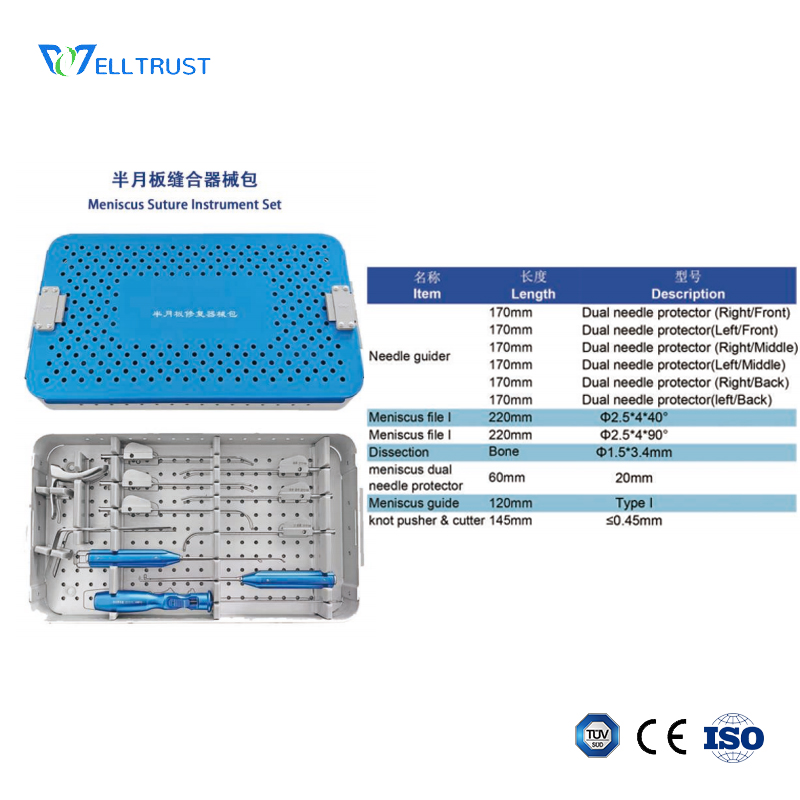
A dedicated Meniscus Repair instrument set brings together instruments designed for related stages of the procedure. This can make instrument organization and selection more straightforward compared with assembling individual instruments from different sets.
Different needle guide orientations and instrument configurations also provide options for procedures involving different areas of the meniscus. For medical device distributors, a complete set can provide a clearly defined product configuration for orthopedic and arthroscopy product portfolios.
Meniscus Repair is a surgical procedure intended to stabilize and approximate selected tears of the knee meniscus. The specific repair technique depends on the tear pattern, location, tissue condition and clinical assessment.
A Meniscus Suture Instrument Set is a collection of surgical instruments designed to support different stages of meniscal repair procedures, including needle guidance, tissue preparation and suture management.
The set includes needle guides, meniscus files, a dissector, meniscus dual needle protectors, a meniscus guide and a knot pusher and cutter.
The product information lists two Meniscus File configurations, both with a length of 220 mm: Φ2.5 × 40° and Φ2.5 × 90°.
The Meniscus Guide included in the set has a listed length of 120 mm and is identified as Type I.
A knot pusher and cutter can be used to assist with positioning and cutting surgical suture knots during appropriate meniscal repair procedures.
No. The suitability of repair depends on factors including the tear pattern, location, tissue condition and the patient's clinical circumstances. The treatment decision should be made by a qualified orthopedic professional.
Meniscus Repair is a surgical approach focused on stabilizing selected meniscal tears while maintaining the available meniscal tissue when clinically appropriate. Arthroscopic procedures require specialized instruments for access, tissue preparation, needle guidance and suture management.
The Well Trust Meniscus Suture Instrument Set combines these functions into one organized instrument configuration. It includes multiple needle guide configurations, meniscus files, a dissector, a dual needle protector, a meniscus guide and a knot pusher and cutter.
With different instrument configurations and working dimensions, the set can be considered for appropriate arthroscopic meniscal repair procedures and provides medical device distributors with a dedicated instrument solution for the meniscus repair product category.
